The Open Road North: A Complete Guide to Motorcycle and Car Rentals Across Canada
Introduction
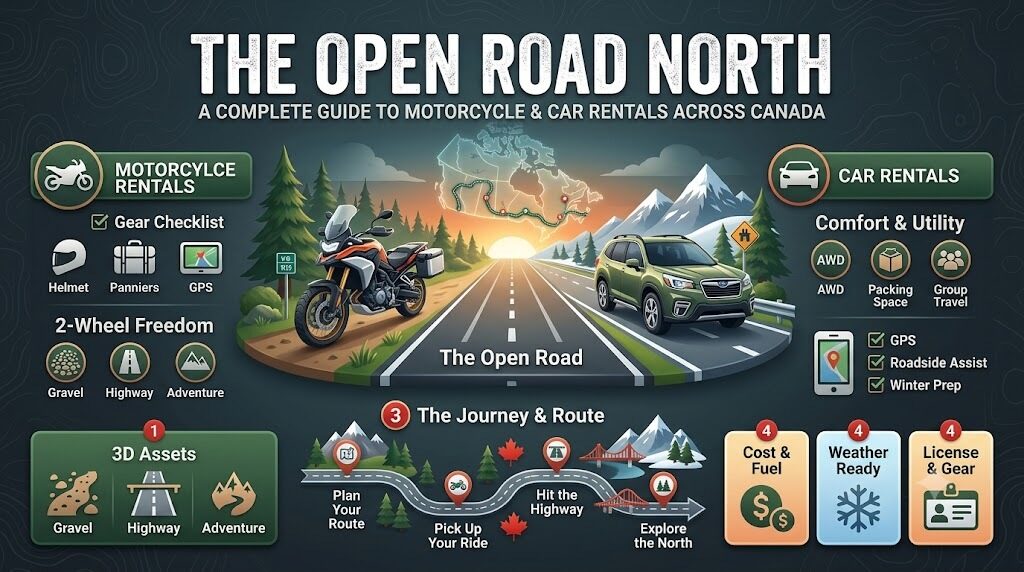
Imagine flying into a Canadian city with a helmet in your carry-on bag, only to discover airport rental desks do not rent motorcycles. Traditional car counters rarely cater to two-wheel enthusiasts, and their contracts often hide confusing insurance fees. Flexible peer rental marketplaces now let you book quality bikes and cars directly from vetted local owners. You can bypass long airport lines, compare clear pricing upfront, and pick up a machine that fits your specific travel route. This comprehensive guide details licensing rules, regional highlights, practical safety inspections, and cost-saving habits. MotoShare.ca operates as an online discovery hub where road-trippers find reliable rides for cross-country exploration.
What Is MotoShare.ca?
MotoShare.ca is an online community marketplace connecting travelers with trusted local vehicle hosts throughout Canada. The service offers city commuters, touring cruisers, adventure dual-sports, and dependable family cars. Guests browse authentic photos, read verified customer feedback, and review clear rates without hidden desk charges. Local vehicle hosts provide clean, well-maintained rides along with friendly neighborhood pickup spots.
How to Rent a Motorcycle in Canada
You must present an unrestricted motorcycle license, a certified helmet, and a major credit card to rent a motorcycle in Canada. Canadian rental operators accept provincial credentials such as an Ontario Class M, British Columbia Class 6, or Alberta Class 6 permit. Foreign tourists can use their valid home country motorcycle license when paired with an official English translation or an International Driving Permit. Most platforms require primary riders to be at least 21 years old. Security deposits generally range between 1,000 and 2,500 Canadian dollars as a temporary card pre-authorization. Nearly 80 percent of prime summer motorcycle slots across Canada sell out by early spring.
Choosing the Right Motorcycle Rental in Canada
Selecting the best motorcycle rental Canada offers depends on your planned travel terrain, riding comfort, and daily distances. Low-slung cruisers provide steady highway tracking for vast prairie stretches and gentle river parkways. Tall dual-sport adventure bikes handle bumpy gravel roads and rugged provincial forestry trails with great stability. Heavy touring bikes include hard weatherproof luggage cases that protect your gear during week-long expeditions. Canadian riding seasons generally begin in late May and wrap up around early October. Selecting a bike with the proper seat height and luggage capacity keeps daily journeys enjoyable.
City Spotlight: Motorcycle Rental Toronto
Arranging a motorcycle rental Toronto provides quick access to scenic weekend loops across Southern Ontario. You can ride west toward the rolling farmland and gentle sweepers near Forks of the Credit. A scenic day run south takes you through quiet orchard country into historic Niagara-on-the-Lake. Heading north brings you into the winding granite corridors and clear waterways of Muskoka cottage country. Neighborhood host pickups help you avoid crowded downtown traffic snarls and expensive parking garages.
City Spotlight: Motorcycle Rental Vancouver
Booking a motorcycle rental Vancouver places you at the doorstep of world-class Pacific mountain touring. British Columbia's famous Sea-to-Sky Highway carries riders past dramatic ocean fjords directly into the alpine peaks of Whistler. Coastal routes feature smooth banked turns, crisp ocean air, and panoramic waterfall view stops. You can also catch local ferries over to Vancouver Island to explore quiet coastal fishing villages. Vancouver's mild marine air creates the longest, most comfortable riding season anywhere in the country.
Mountain Touring: Motorcycle Rental Calgary
Reserving a motorcycle rental Calgary provides the fastest launching pad into the Canadian Rocky Mountains. Calgary sits just an hour east of the majestic peaks guarding Banff National Park. The world-renowned Icefields Parkway treats riders to towering glaciers, turquoise alpine lakes, and dramatic mountain passes toward Jasper. High alpine passes demand wind-blocking layers because high-elevation weather drops rapidly. Securing your Calgary bike early guarantees you have dependable wheels ready for breathtaking mountain summits.
Vehicle Category and Canadian Route Matrix
| Motorcycle Category | Ideal Riding Style | Iconic Canadian Route | Primary Practical Advantage |
| Adventure Dual-Sport | Mixed gravel and backroads | Stewart-Cassiar Highway | Generous ground clearance handles road construction and loose gravel |
| Long-Haul Touring Bike | Multi-day cross-country trips | Trans-Canada Highway | Large wind fairings and hard cases shield riders and gear from elements |
| Classic Cruiser | Relaxed scenic exploration | Cabot Trail or Niagara Parkway | Low center of gravity delivers relaxed balance during slow scenic cruises |
| Standard / Naked Street | Quick city and weekend jaunts | Sea-to-Sky Highway | Agile, upright geometry allows easy steering through tight mountain bends |
Local Searches: Motorcycle Rental Near Me
Searching for motorcycle rental near me helps you locate available rides parked directly in your destination city. Booking within residential neighborhoods avoids expensive airport car counters and long shuttle delays. You can study genuine renter reviews, compare pickup addresses, and chat with hosts before paying. Seeing exact photos of the actual machine prevents unwanted surprises at pickup time.
Riding Off-Pavement: Adventure Motorcycle Rental Canada
An adventure motorcycle rental Canada gives you the freedom to explore remote logging roads and rocky gravel trails. Adventure bikes feature spoked rims, long-travel shock absorbers, and tough skid plates that guard against loose stones. Riders must carry a compact 12-volt mini tire inflator, a tubeless plug kit, and offline GPS trail maps. Durable off-road boots and abrasion-resistant riding suits protect against flying gravel and mud. These sturdy machines give you full confidence when paved provincial routes turn into loose dirt trails.
Step-by-Step Guide: Planning a Motorcycle Road Trip Canada
Proper organization ensures your cross-country tour remains safe, comfortable, and memorable:
Schedule your journey between late June and late August for warm temperatures and clear mountain passes.
Calculate fuel ranges carefully because gas stations in northern and interior corridors often sit 150 kilometers apart.
Pack waterproof outer layers and thermal garments to handle sudden afternoon downpours.
Mount an approved bear spray canister in an exterior bike holster when riding through national parks.
Secure hotel rooms, park campsites, and rental bookings well in advance of peak summer weekends.
Expert Touring Advice & Original Insights
Canadian mountain passes can shift from sunny warmth to sleet within an hour. Always check your tire pressures every morning because crisp mountain air quickly reduces tire pressure. Professional Canadian Rockies guide Dave MacIntyre advises: "Give big wildlife plenty of room. Elk, moose, and black bears cross highways suddenly, especially near dawn and twilight. Ride well within your sightlines."
Four-Wheel Convenience: Car Rental Canada
Securing a car rental Canada remains the smartest option when traveling with kids, heavy suitcases, or pets. Enclosed passenger cars offer heated interiors, spacious trunks, and complete shelter from unpredictable mountain storms. Choosing an all-wheel-drive sedan or SUV lets you tour comfortably during early spring and late autumn. Locked trunks keep your luggage, camping gear, and cameras hidden from view while hiking.
Exploring Ontario on Four Wheels: Car Rental Toronto
Picking up a car rental Toronto allows travelers to explore rural Ontario at a relaxed pace. You can drive north into Algonquin Provincial Park to photograph wild moose, maple forests, and quiet lakes. Another easy day drive leads east to the historic lighthouses and boutique cider mills of Prince Edward County. Enclosed cars provide comfortable family touring throughout unpredictable spring and autumn seasons.
Pre-Trip Vehicle Walkaround Inspection Checklist
| Inspection Check | What to Verify Before Leaving | Warning Sign | Real-World Safety Impact |
| Tire Tread and Pressure | Minimum 2 mm tread depth and correct cold PSI | Bald wear spots, embedded nails, or low pressure | Guards against highway blowouts and slick wet-weather skids |
| Brake Pads and Fluid | Visible pad lining and light amber reservoir fluid | Grinding metal noises, spongy levers, or dark fluid | Guarantees strong, predictable braking down steep mountain hills |
| Drive Chain or Belt | Proper tension deflection and clean lubrication | Heavy surface rust, tight links, or flapping slack | Prevents snapped drive chains from jamming the rear wheel |
| Signal and Headlights | Clean lenses and active low beam, high beam, and signals | Burned-out bulbs, cracked plastic, or rapid flashing | Keeps you clearly visible to oncoming drivers in dense valley fog |
Real-Life Case Studies & Use Cases
Overseas Visitor in the Rockies: A traveler flew into Alberta, collected an adventure bike in Calgary, and toured Jasper safely after completing a thorough pre-trip vehicle walkaround.
Toronto Weekend Escape: A downtown resident rented a highway cruiser for a three-day autumn loop through Muskoka, enjoying open-air riding without year-round ownership costs.
Vancouver Island Road Trip: A family booked an all-wheel-drive wagon in Vancouver, rode the ferry to Nanaimo, and explored remote beaches with all their luggage kept dry.
Prospective Buyer Trial: A licensed rider rented a middleweight standard motorcycle for a weekend test run before finalizing a private vehicle purchase.
8 Costly Mistakes to Avoid When Renting Vehicles
Carrying Incomplete Licenses: Presenting an automobile-only license prevents you from collecting a reserved motorcycle. Solution: Confirm your home driver's license displays a full motorcycle endorsement before booking.
Skipping Departure Photos: Failing to photograph existing scratches leaves you open to dispute claims upon vehicle return. Solution: Capture high-resolution, dated photos of every body panel before leaving the pickup spot.
Ignoring Alpine Cold: Wearing thin mesh jackets leads to severe shivering when climbing high mountain passes. Solution: Pack windproof thermal layers and full-coverage rain suits on every Canadian road trip.
Disregarding Daily Mileage Caps: Overlooking mileage terms causes unexpected surcharge invoices at checkout. Solution: Calculate your total itinerary distance and select listings with sufficient kilometer allowances.
Improper Food Storage: Leaving snacks or fragrant items in soft motorcycle saddlebags attracts forest animals. Solution: Place all food inside sealed bear-proof campground bins when parking overnight.
Procrastinating on Bookings: Waiting until midsummer limits your vehicle choices and increases daily prices. Solution: Lock in your vehicle reservation six to eight weeks ahead of your trip.
Wearing Uncertified Helmets: Riding with non-compliant novelty helmets violates Canadian provincial road laws. Solution: Wear a comfortable helmet that displays an authentic DOT or ECE safety certification badge.
Overlooking Deposit Holds: Forgetting about card authorizations reduces your available travel spending funds. Solution: Reserve sufficient available credit balance to cover security deposit requirements comfortably.
The MotoShare 7-Step Rental Framework
This structured system guides you smoothly from initial route planning to final vehicle return:
Step 1: Map Route. Establish your daily mileage goals and choose your favorite highways.
Step 2: Pick Vehicle. Select an engine size and seating layout that matches your cargo and passenger needs.
Step 3: Confirm License. Verify that your provincial or foreign driver's license satisfies local rental rules.
Step 4: Review Coverage. Check third-party liability limits, roadside support terms, and deductible options.
Step 5: Book Early. Finalize your reservation dates online well before summer crowds arrive.
Step 6: Inspect Vehicle. Test all lights, check tire conditions, and document exterior marks before departing.
Step 7: Ride Responsibly. Follow posted metric speed signs and enjoy the journey across Canada.
How MotoShare.ca Fits Into Your Canadian Journey
MotoShare.ca makes discovering and renting vehicles throughout Canada simple, transparent, and direct. The platform displays real photos, honest community ratings, and clear daily prices across major travel hubs. You can chat directly with local vehicle hosts to ask about luggage racks or local riding tips. MotoShare.ca removes traditional counter delays so you can begin your open-road journey quickly.
Frequently Asked Questions
1. What driver's license do I need to rent a motorcycle in Canada?
You must present a valid, unrestricted motorcycle license to rent a motorcycle in Canada. Canadian riders can use an Ontario Class M, British Columbia Class 6, or Alberta Class 6 license. International travelers need their home motorcycle license accompanied by an official English translation or an International Driving Permit. Beginner learner permits are not accepted for rental checkouts.
2. Can international tourists rent and ride motorcycles in Canada?
Yes, international visitors can legally rent and operate motorcycles across all Canadian provinces. You need a valid passport, a full home country motorcycle license, and an accepted credit card. If your driver's license uses a non-Latin alphabet, carry an International Driving Permit for roadside verification. Always review provincial traffic regulations and speed laws before starting your journey.
3. What is the standard minimum age for vehicle rentals?
The typical minimum age to rent vehicles on peer platforms across Canada is 21 years old. Drivers between 21 and 24 years old may encounter a modest young driver surcharge on specific listings. High-displacement sport bikes or high-value sports cars may require renters to be at least 25 years old with multiple years of riding experience.
4. How does insurance coverage work for rented vehicles?
Every rental includes third-party liability coverage to satisfy provincial road safety laws. Travelers can select optional physical damage protection packages at checkout to limit personal out-of-pocket deductibles. Review your personal auto insurance policy or credit card perks beforehand to see if they extend coverage to rental motorcycles and peer-to-peer vehicles.
5. What safety riding gear is legally mandatory in Canada?
All Canadian provinces strictly require motorcycle operators and passengers to wear an approved motorcycle helmet. Your helmet must carry an official DOT, ECE, or Snell safety certification emblem. Protective eyewear, abrasion-resistant textile jackets, heavy gloves, and sturdy riding boots are strongly recommended to defend against cold wind, loose road gravel, and unexpected highway debris.
6. When is the ideal season for a Canadian motorcycle trip?
The most reliable window for a Canadian motorcycle road trip runs from late June through early September. Summer offers long daylight hours, dry road surfaces, and open mountain passes. Early spring and late autumn frequently bring freezing morning road temperatures, sudden snow flurries, and slick highway conditions across higher mountain elevations.
7. Are credit card security deposits mandatory when booking?
Yes, a temporary security deposit pre-authorization is placed on your credit card at vehicle pickup. Deposit sums generally range from 1,000 to 2,500 Canadian dollars depending on the machine value and selected damage protection plan. The host releases this card hold once the vehicle returns clean, fully fueled, and free of damage.
8. Can I take a rental vehicle across provincial borders?
Yes, most hosts permit travel across Canadian provincial borders for long-distance highway touring. Always inform your host about your planned travel itinerary prior to vehicle pickup. Taking rental vehicles across the international border into the United States requires prior written permission and specialized commercial insurance documentation from the platform.
9. What happens if a vehicle experiences a highway breakdown?
Pull over onto the paved highway shoulder and call the 24-hour emergency roadside assistance dispatch immediately. Rental coverage packages include roadside towing, flat tire changes, battery boosts, and fuel drops. Notify your vehicle host right away through the platform messaging tool so they can coordinate mechanical repairs or arrange backup transportation.
10. Is an adventure motorcycle necessary for Rocky Mountain touring?
An adventure motorcycle is not necessary if your trip follows paved national park routes like the Icefields Parkway. Touring cruisers, standard street bikes, and sport tourers navigate paved mountain highways with complete ease. An adventure dual-sport is useful only if you plan to venture onto unpaved fire access routes or remote gravel roads.
Conclusion
Exploring Canada's vast landscapes along open highways creates memories that last a lifetime. Whether you ride a nimble motorcycle through mountain curves or cruise in a family car along lake shores, careful planning makes all the difference. Always verify your licensing details, inspect your rental vehicle thoroughly before departing, and respect changing mountain weather. MotoShare.ca serves as a helpful educational and rental discovery resource for riders and road-trip enthusiasts across the country. Book your ride early, pack your gear, and enjoy the beauty of Canada's open roads safely.