Best Hospitals for Gastroenterology: A Simple Guide
Introduction
Imagine a burning chest after dinner, or a belly that aches for days. Many people brush off these signs. Then worry grows. Your gut does much more than digest food. It shapes your energy, mood, and daily comfort. This guide walks you through the full path, step by step. You will meet the gastroenterologist, learn about common digestive disorders, and see how tests and treatments work. You will also read about surgery in calm, simple terms. Along the way, GastroHospitals.com can help you find trusted hospitals and specialists. Think of it as a map for your care. Whether you feel mild discomfort or serious pain, you deserve clear answers and caring support. Take a deep breath. Clear facts make hard choices feel lighter.
Meet the Gut Doctor: What Is Gastroenterology?
Gastroenterology is the branch of medicine that cares for your digestive tract. A gastroenterologist is the doctor trained for this job. This expert looks after the stomach, bowels, liver, gallbladder, and pancreas. You might see one for acid burn, cramps, constipation, or yellow skin. Many visits also cover health checks, like cancer screening. Today, gastroenterology treatments range from simple diet advice to advanced camera-guided care.
How GastroHospitals.com Helps You Search
Picking a hospital can feel like a maze. GastroHospitals.com makes it easier. It is a digestive-health directory with 50 leading hospitals. Each listing highlights key care areas, such as GI, liver, pancreas, IBD, and endoscopy. You can browse, compare, and shortlist in one place. The platform guides your search. Your own doctor still guides your health.
Is It Time to Book a Visit?
Do not wait if your body keeps sending warning signs. Book a visit for belly pain that lingers. Do the same for heartburn that strikes daily, or food that sticks in your throat. Blood in the stool and sudden weight loss also need a check. Go to the emergency room for intense pain, bloody vomit, or black stools.
Digestive Disorders You Should Know
Digestive disorders come in many forms. Four groups appear most often: reflux (GERD), stomach infections, inflammatory bowel disease (IBD), and liver illness. Finding them early gives you more options. It also lowers the chance of lasting harm to your gut and liver.
Table 1: Digestive Symptoms and Possible Medical Steps
| Symptom | What It May Need | Possible Next Step |
|---|---|---|
| Burning chest after meals | Reflux review | See a gastroenterologist |
| Blood in stool | Urgent exam | Ask about a colonoscopy |
| Watery stools with fever | Infection care | Sip fluids, call a doctor |
| Yellow eyes or skin | Liver check | Get help soon |
Gastroenteritis Treatment
Gastroenteritis is an infection that inflames your stomach and bowels. Viruses, bacteria, or tainted food often cause it. Expect vomiting, loose stools, and cramps. Gastroenteritis treatment is mostly about replacing lost water. Take small sips of oral rehydration salts. Try soft foods like bananas, plain rice, and toast. Seek a doctor if you notice blood, strong fever, or very little urine.
GERD Treatment
With GERD, acid creeps up from the stomach into the food pipe. That causes the burn. GERD treatment usually starts with small habit changes. Eat lighter dinners. Stay upright for a few hours after meals. Cut back on spicy, fatty, or fizzy items. If habits are not enough, your doctor may suggest acid-lowering medicine. Surgery is a last option for hard cases.
IBD Treatment
IBD causes long-lasting swelling in the digestive tract. Crohn's disease and ulcerative colitis are the two main kinds. IBD treatment aims to calm the swelling and ease symptoms. Doctors use medicines, and some people also change what they eat. A daily symptom log helps you spot triggers. When medicine fails, surgery can remove the damaged section.
Liver Disease Treatment
Your liver filters blood and helps break down food. Viruses, heavy drinking, and fat build-up can harm it. Liver disease treatment depends on the root cause. Plans often mix healthy meals, less alcohol, and prescribed medicine. Some viral infections respond to targeted drugs. Frequent check-ups let a specialist track your liver over the years.
Colonoscopy Procedure
Many people fear this test, but it is gentler than you think. A colonoscopy procedure lets a doctor view your large bowel, the lower part of your gut, from the inside. Before the test, you take a cleansing drink so the bowel is empty. During the test, you rest under sleep medicine. The doctor uses a thin, bendy tube with a tiny camera.
Gastrointestinal Surgery
Surgery sounds scary, yet it often brings big relief. Doctors may advise gastrointestinal surgery for gallstones, hernias, blocked bowels, or severe IBD. Many surgeons now use keyhole surgery, also called laparoscopy. They make a few tiny cuts and guide a small camera. You often feel less pain and heal faster. Your surgeon will talk through every step first.
Choosing the Best Hospitals for Gastroenterology
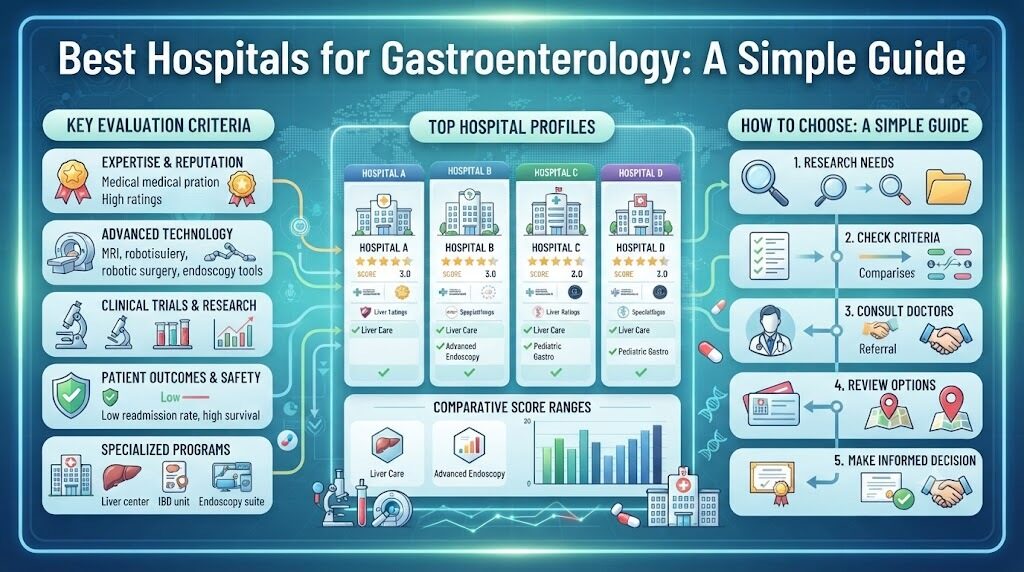
Which hospital is right for you? Start with the team. Check each doctor's training and experience. Next, look for modern endoscopy rooms and clean wards. Confirm that emergency care runs day and night. Finally, ask whether your insurance works there. These checks help you spot the best hospitals for gastroenterology.
Table 2: What to Check When Choosing a Gastroenterology Hospital
| Factor | Why It Matters | What to Check |
|---|---|---|
| Specialist team | Skill brings safer care | Training and experience |
| Endoscopy rooms | Clear images find problems | Modern, clean equipment |
| Emergency service | Pain cannot wait | Open 24/7 |
| Insurance | Costs affect choices | Accepted plans |
| Cleanliness | It lowers infection risk | Hygiene rules |
Short Stories From Real-Life Situations
- Nisha felt a burn in her chest each night. She ate dinner earlier, raised her pillow, and saw a doctor. Relief followed.
- Karan, 52, joined a screening program. His doctor removed tiny growths before they turned risky.
- Pooja had stabbing belly pain at midnight. She rushed to the emergency room and got quick care.
- Farid caught a stomach bug. He sipped rehydration salts and called his doctor when his fever rose.
Mistakes to Skip When Choosing Digestive Care
- Brushing off heartburn. Book a visit if it lasts over two weeks.
- Quitting medicine early. Finish the course your doctor gives you.
- Taking painkillers on an empty stomach. Eat first, and ask your doctor.
- Avoiding screening tests. Ask when your first test is due.
- Trusting social media tips. Use them for ideas, then check with a doctor.
- Choosing by cost alone. Weigh skill, safety, and comfort too.
- Feeling too shy to share symptoms. Tell your doctor everything.
- Missing follow-up visits. Mark each date on your calendar.
Putting It Together With GastroHospitals.com
GastroHospitals.com joins three things in one place: hospital discovery, condition guides, and specialist profiles. First, learn about your condition. Then see where it is treated. This approach makes it simple to compare gastroenterology treatments. You save time, and you plan with more confidence.
Frequently Asked Questions
1. Who should I see first for digestive problems?
Start with your family doctor if symptoms are mild. They can check you and suggest tests. Book a gastroenterologist directly if you have blood in stool, trouble swallowing, or pain that will not fade. This specialist focuses only on digestive health. In an emergency, skip the clinic and go straight to the hospital.
2. What is the best first step for gastroenteritis treatment at home?
Focus on fluids first. Take small, steady sips of oral rehydration salts or clean water. Rest your body. When hunger returns, try plain rice, bananas, or toast. This is the heart of gastroenteritis treatment at home. See a doctor if vomiting will not stop, or if you see blood or feel very weak.
3. Do I need lifelong GERD treatment?
Not always. Some people control mild GERD with diet and habit changes alone. Others need medicine for months or longer. Your doctor will review your symptoms and adjust your GERD treatment over time. Do not stop medicine on your own. Long-term acid reflux can irritate the food pipe, so regular follow-ups matter.
4. Is IBD the same as IBS?
No. They sound alike but differ. IBS stands for irritable bowel syndrome. IBD means real swelling and damage in the gut wall. IBS affects how the gut works, without that damage. Both can cause pain and bathroom changes. A gastroenterologist uses tests to tell them apart, because the care plans are very different.
5. Can food changes help during IBD treatment?
Often, yes, but results differ for each person. Some people find that certain foods spark flare-ups. A food and symptom diary can show your pattern. Share it with your doctor or a diet expert. Food changes support medicine. They do not replace it. Never cut out whole food groups without professional advice.
6. What are early signs of liver trouble?
The liver often stays quiet at first. Watch for tiredness, nausea, loss of appetite, dark urine, pale stools, and itchy skin. Yellow eyes or skin is a clear warning. Swelling in the belly or legs can also appear. See a doctor early, because quick liver disease treatment can protect your health.
7. How often do adults need a colonoscopy?
It depends on age, family history, and past results. A colonoscopy procedure can find problems early. Many guidelines suggest starting screening around age 45. If the test is normal, the next one may be years away. If doctors find growths, you may need it sooner. Your gastroenterologist will set a safe schedule for you.
8. How long does colonoscopy recovery take?
Most people recover within a day. The sleep medicine fades in a few hours, so do not drive that day. Gas and mild bloating are common. Walk around to help it pass. You can usually eat normally soon after. Call your doctor if you have heavy bleeding, fever, or strong belly pain.
9. Is keyhole surgery safer than open surgery?
Keyhole, or laparoscopic, surgery uses small cuts, so many patients have less pain and heal faster. But it is not right for everyone. Your surgeon picks the method based on your condition, past surgeries, and overall health. Every gastrointestinal surgery has risks. Ask your surgeon to explain the benefits and risks of each choice.
10. What should I ask a hospital before booking?
Ask about the doctor's experience with your condition. Ask which tests and treatments they offer. Find out about emergency care at night. Check costs, insurance, and wait times. Ask what care looks like after you go home. The best hospitals for gastroenterology welcome your questions. Write them down before you call.
11. How can GastroHospitals.com help me compare hospitals?
GastroHospitals.com gathers 50 leading hospitals in one digestive-health directory. You can view each hospital's focus areas, such as liver care, IBD care, and endoscopy. This lets you build a short list fast. It is a discovery tool, not a medical service. Use it to plan questions, then talk with a qualified doctor.
12. Can digestive disorders run in families?
Yes, some can. IBD, certain liver conditions, and some bowel cancers can appear in several family members. Having a relative with one of these does not mean you will get it. It does mean you should tell your doctor. You may need earlier or more frequent screening. Sharing your family history helps your doctor plan better care.
Conclusion
Your digestive health deserves attention. Small signs, like daily heartburn or lasting belly pain, often carry big messages. Act early, and many problems become easier to manage. Learn what your symptoms may mean, and ask your gastroenterologist clear questions. Compare hospitals with care, and pick a team you trust. GastroHospitals.com can support your search by bringing leading hospitals and specialists together in one place. Keep in mind that this blog is for learning only. It cannot replace personal medical advice. Please talk with a qualified doctor about your own health before you make any care decision. You are not alone, and good care is within reach.