Best Drones Guide for Buyers, Business Owners, and Drone Fans
What is DronesBee.com
DronesBee.com is a free discovery hub for drone fans and business owners. It works like a big library and a trusted phone book in one place. First, it holds a wide database of drone models from many brands. You can look up flight times, camera details, and price ranges in one spot. Second, it keeps a directory of verified drone pilots. Each pilot shares their license, insurance, and past work. Third, it offers simple guides that teach safe flying and smart buying. So you do not need deep tech knowledge to use it. The platform stays open for everyone. It does not push any single brand or pilot. Instead, it lets you see your full set of choices. That way, you decide with clear eyes.
Picking the Right Flying Machine
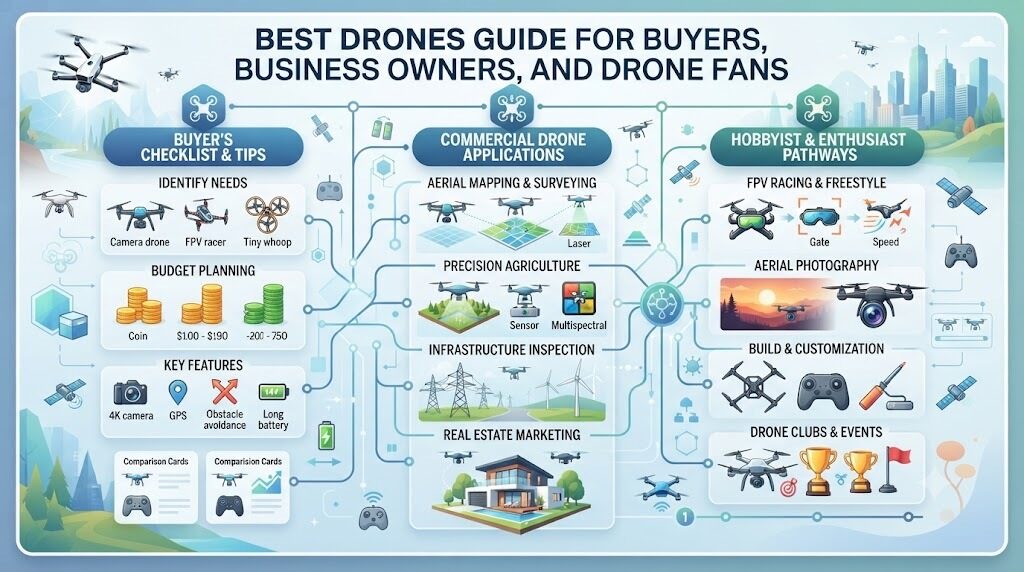
New buyers often ask one big question. Which drone should I buy first? The answer starts with your goal. If you want fun videos, a small drone works fine. If you want paid work, you need a stronger model. Next, check flight time. Most small drones fly for 20 to 30 minutes. Pro models can fly longer. Also, look at the camera sensor. A bigger sensor grabs more light. That means cleaner shots at dusk. Battery limits matter too. So always buy one or two spare batteries. Read real drone reviews before you pay. Honest drone reviews show what breaks and what lasts. They also reveal hidden costs like extra props or repair fees. Then make a short list of the best drones for your budget. Do not chase the newest model just because it looks cool. A mid-range drone with good parts often beats a cheap shiny one. Finally, think about spare parts and service near you. A great drone with no repair shop nearby can sit unused for weeks.
Evaluating Hardware Side by Side
Smart buyers never trust one ad alone. They run a drone comparison first. A good drone comparison puts two or three models in one view. Then you can spot real gaps fast. Check payload capacity if you plan to carry gear. Cameras, lights, and spray tanks all add weight. Next, look at range. Longer range means safer flights in big open areas. But range claims can be too bold. So read user notes, not just the box. Also, study obstacle sensing. This tech helps the drone stop before a crash. It saves money and stress. Full drone specifications list weight, top speed, sensor size, and battery life. Read those drone specifications with care. Compare numbers, not slogans. Also, check what comes in the box. Some brands sell the charger apart. That adds cost later. Finally, watch a few flight videos shot by normal users. Real footage shows true camera quality. It also shows how the drone handles wind.
Table 1 (Drone Selection & Buying Factors)
| Key Factor | What to Look For | Common Buying Trap | Why It Matters |
|---|---|---|---|
| Flight Time | 25 to 40 minutes per battery | Trusting best-case lab claims | Short flights stop your work early |
| Camera Sensor | 1-inch sensor or good low-light score | Chasing high megapixels only | Sensor size beats raw pixel count |
| Battery Health | Smart cells with clear cycle data | Cheap third-party packs | Weak cells cause sudden power loss |
| Range | Stable signal in open areas | Overstated long-range ads | Lost signal means lost drone |
| Obstacle Sensing | Front, back, and side sensors | Buying only front sensors | Side crashes are very common |
| Payload | Clear weight limit in grams | Ignoring added gear weight | Overload cuts flight time fast |
| Spare Parts | Props, motors, and arms in stock | No local repair support | Repairs take weeks without parts |
| Price vs Use | Match cost to real tasks | Paying for features you never use | You waste money on unused tools |
Hiring Professional Help for High-Stakes Jobs
Some jobs are too risky to fly on your own. Think about power lines, busy roads, or crowded events. One wrong move can hurt people or damage property. So many firms hire experts instead. Good drone services bring trained hands, safe gear, and full insurance. That cover protects you if something fails. But how do you find good help? Start by searching for drone pilots near me. This simple search shows local experts who know your area rules. Then check each pilot's license and flight log. Ask about their insurance limit and safety record. Also, ask what gear they fly and why. A pro pilot will answer with clear facts. They will also ask about your site and your goal. That shows they plan each flight with care. So do not pick the cheapest quote alone. Cheap often means no insurance or weak gear. A fair price with full cover is the safer deal. Good drone services also hand over clean files and reports. That saves you time and stress later.
Capturing Stunning Media from Above
Great photos sell homes, products, and events. So many businesses now book aerial photography services. Real estate agents use sky shots to show land size and layout. Wedding teams use drones to film the full crowd and the venue. Ad firms use them to shoot cars, hotels, and resorts. But good sky media needs more than a good camera. It needs soft light, smooth flight paths, and safe timing. So pick a pilot who plans each shot before takeoff. Ask to see past work in your field. A pilot who shoots farms may not shoot weddings well. Also, check the file types they hand over. You want high-resolution photos and clean video files. Ask about backup copies too. A pro keeps two copies of every file. That way, your big day or big launch stays safe. Also, talk about drone rules near airports and crowds. A skilled pilot knows where to fly and where to wait.
Mapping Land and Job Sites Accurately
Builders and land owners need exact maps. So they book drone surveying services for big sites. A survey drone flies a set path and takes many photos. Then smart software stitches them into one clear map. This map shows ground height, slopes, and key marks. It also turns into a 3D model you can spin and study. That helps planners spot problems before digging starts. It also tracks progress week by week. So you can prove how much work is done. Good drone surveying services save days of walking with poles and tools. They also reach wet, steep, or blocked spots with ease. But the data must be correct. So hire pilots who use GPS base stations and check points. Ask how they handle errors and how they store your files. Also, ask if they can merge new maps with old ones. That gives you one long history of your site.
Checking Hard-to-Reach Infrastructure Safely
Some places are too dangerous for people to climb. Think about tall towers, wind blades, bridges, and wet roofs. So firms book drone inspection services instead. A drone flies close and takes sharp close-up shots. It can also carry heat cameras to find hot spots. That helps teams catch weak parts before they break. So repairs happen early and cost less. Best of all, no worker hangs from a rope in high wind. That cuts the risk of bad falls and saves lives. Good drone inspection services also record every flight. Then you get a clear report with photos and notes. That report helps you plan repairs and prove safety to your boss. But you must pick a pilot with the right skills. Ask about their gear, their license, and their past jobs. Also, ask how they handle power lines and signal loss. A skilled pilot plans a safe path and keeps a backup plan.
Modern Farming from the Air
Farmers face big fields and little time. So many now use agricultural drone services to work smarter. These drones scan crops with special cameras. They spot sick plants, dry spots, and pest zones fast. Then the farmer treats only the weak parts. That saves water, seed, and spray. Some big drones also spray fields with fine mist. This cuts the need for heavy tractors on wet soil. It also reaches spots that machines cannot touch. So crops stay safe and yields go up. But farm flights need care. Wind, heat, and spray drift all cause problems. So hire pilots who know farm rules and local weather. Ask about their spray license and their safety steps. Also, ask for maps you can read and use. A good pilot hands over clear field maps. Then you can plan the next season with real data.
Table 2 (Commercial Drone Services Comparison)
| Service Type | Typical Equipment | Main Business Benefit | Safety Check Needed |
|---|---|---|---|
| Aerial Photography | Camera drone with gimbal | Sharp ads and fast home sales | Crowd and airport rules |
| Surveying | GPS drone with mapping software | Exact maps and 3D site models | Ground control points |
| Inspection | Drone with zoom and heat camera | Safe checks on tall gear | Power line distance |
| Agriculture | Spray drone or crop camera drone | Better crops and less waste | Wind and spray drift |
| Event Coverage | Quiet drone with 4K camera | Full crowd and venue shots | People safety zone |
| Real Estate | Wide lens camera drone | Clear land size and layout | Local flight permits |
Real-Life Scenarios
A real estate agent had one slow listing near a busy road. She hired a local pilot for sky photos. The new shots showed the big yard and the nice view. The home sold in nine days.
A farm owner saw dry patches in his wheat fields. He booked a crop scan flight. The map showed a blocked water line. He fixed it fast and saved most of his crop.
A building manager needed a roof check after a storm. He booked a drone flight instead of sending workers up. The team found two loose panels with no risk to any person.
8 Common Mistakes to Avoid
Hiring uninsured operators. If a drone crashes, you may pay for the damage. So always ask for proof of insurance first.
Ignoring local flight permits. Many areas need a permit or a no-fly check. So read the rules before you fly or hire.
Buying beyond your skill level. A pro drone can crash fast in new hands. So start simple and grow your skills step by step.
Ignoring weather limits. Strong wind and rain cause most small drone crashes. So check the forecast and wait if needed.
Trusting bold range claims. Ads often show the best-case number only. So read user notes and test in open space.
Skipping a pre-flight check. Loose props and low battery cause many fails. So run a full check before every single flight.
Choosing price over safety. A cheap pilot may skip key safety steps. So weigh skill and cover, not just the quote.
Forgetting file backups. Lost files mean lost work and lost money. So keep two copies of every photo and video.
The 7-Step Drone Planning Process
First, set your goal. Write down what you need the drone to do. Second, search for gear or pilots that fit that goal. Third, make a shortlist of three to five good choices. Fourth, compare them side by side using clear facts. Fifth, ask each seller or pilot your key questions. Sixth, verify licenses, insurance, and past work. Finally, decide and book with full confidence. This simple path works for buyers and business owners alike. It saves time, cuts risk, and stops costly errors. So use it for every drone task you face.
Frequently Asked Questions
Question 1: What should I check first before buying a drone?
Start with your main goal. Ask what you want the drone to do. Then check flight time, camera quality, and spare part support. Also, read real user reviews before you pay. This order keeps you from buying the wrong model.
Question 2: How long do most drone batteries last?
Most small drone batteries last 20 to 30 minutes. Bigger pro models can reach 40 minutes or more. But wind, weight, and cold air cut that time. So always carry one or two spare batteries for real work.
Question 3: Do I need a license to fly a drone?
It depends on your country and your drone's weight. Many places need a license for paid work. Some also need a license for heavy hobby drones. So check your local rules before your first flight.
Question 4: Why is insurance important for drone pilots?
Insurance covers damage if a drone crashes into property or hurts someone. Without it, you may pay big costs yourself. So always ask a pilot for proof of insurance before you hire them for any job.
Question 5: How do I find good drone pilots near me?
Search for drone pilots near me and read each profile with care. Check their license, insurance, and past work photos. Also, ask for two client names you can call. This step shows who is truly reliable.
Question 6: What is drone surveying used for?
Drone surveying makes exact maps and 3D models of land. Builders use it to plan sites and track progress. Farmers use it to study field shapes. It saves time and reaches spots that people cannot walk to.
Question 7: Can drones really inspect tall buildings?
Yes, drones can inspect tall buildings, towers, and bridges with ease. They carry zoom and heat cameras to spot weak parts. This keeps workers on the ground and away from risky climbs. So safety goes up and costs come down.
Question 8: How do agricultural drones help farmers?
They scan crops to find sick plants and dry spots fast. Some also spray fine mist on fields. This cuts water, seed, and spray use. So farmers save money and grow more food on the same land.
Question 9: Is aerial photography hard to learn?
Basic sky photos are easy to learn with small drones. But pro-level shots need smooth control and good light sense. So practice in open space first. Then study framing and flight paths before paid work.
Question 10: What weather stops a drone flight?
Strong wind, rain, snow, and fog all stop safe flights. Most small drones cannot handle winds above 20 mph. So always check the forecast first. If the weather looks bad, wait for a better day.
Question 11: How much do drone services cost?
Prices change by job type, site size, and travel distance. Simple photo flights cost less than full survey maps. So ask for a clear quote with all fees listed. Then compare at least three quotes before you decide.
Question 12: Why should I use DronesBee.com for research?
DronesBee.com gathers gear facts and pilot details in one open place. It does not push one brand or one seller. So you can compare choices with clear eyes. Then you decide what fits your goal and your budget.
Conclusion
Choosing a drone or hiring a pilot does not have to feel hard. You just need clear facts and a calm plan. First, set your goal. Then research gear and read real drone reviews. Next, compare specs side by side. Also, always check licenses, insurance, and safety records. Fly only in good weather and follow all local rules. Keep your skills sharp and your gear in good shape. When a job is too risky, hire trained hands instead. That choice protects people, property, and your name. With the right steps, every flight can go well. DronesBee can help you start that journey today with honest facts and trusted pilot listings. So take your time, stay safe, and choose with care.