Fertility Treatment Options for Different Reproductive Health Needs
Introduction
When people first think about fertility care, two worries usually come first. Will this cost more than we can handle? And will it even work? These two questions drive most of the anxiety around this process. Unfortunately, straight answers are hard to find online. Clinics often advertise best-case scenarios. Pricing pages rarely show the full picture. This gap between marketing and reality leaves patients guessing. IVFHospitalsNow.com was built to close that exact gap. It functions as an independent, patient-focused research tool. It has no clinic to promote and no treatment to sell. Its only job is helping you see costs and outcomes honestly. This guide starts with those two big questions, then moves into everything else you need to know.
What is IVFHospitalsNow.com
Before going further, it helps to understand what this platform actually is. IVFHospitalsNow.com is not a hospital or treatment provider. It performs no procedures and runs no lab work. Instead, it functions purely as an information source. You'll find honest cost explanations written in plain language. You'll find structured comparisons between different providers too. Nothing here nudges you toward a specific clinic or country. The platform exists to inform, not to influence. Every real decision still rests with you and your medical team.
Breaking Down Treatment Expenses First
Let's tackle the money question right away, since it weighs heavily on most patients. IVF treatment cost is almost never a single number you can quote instantly. It's actually a sum of several separate charges. Medication pricing alone can vary a lot from patient to patient. On top of that, monitoring visits, lab fees, and diagnostic testing all add up. If you freeze embryos, that typically becomes its own separate charge too. Many clinics only advertise their base procedure fee at first. This creates an unpleasant surprise once every extra cost gets added later. Always ask for a full, written cost breakdown before agreeing to anything. This one habit protects your finances more than any other single step.
Understanding Clinic Results Without the Hype
Now let's address the second big worry: will it actually work? IVF success rates deserve a much closer look than one bold headline number. That single percentage often hides context that really matters. Age changes outcomes more than most advertising ever admits openly. A patient in her late twenties will likely see very different results than someone in her early forties. This is exactly why live birth rates, sorted by age bracket, matter far more than a general pregnancy statistic. A positive pregnancy test isn't the same thing as a healthy, full-term delivery. Clinics that openly share this detailed breakdown usually deserve more of your trust.
How to Objectively Compare Centers
Once you understand cost and success data, the next step is comparison. Learning how to compare IVF clinics starts with checking accreditation status first. This single step confirms a provider meets recognized medical standards. From there, look closely at their lab equipment and staff experience levels. Ask how many treatment cycles they typically manage in a year. Never settle for just one advertised price during this process. Request a full, itemized cost sheet delivered in writing instead. Ask direct questions about extra fees tied to storage or repeat testing. Genuine patient feedback, whenever you can find it, adds one more useful layer here.
Table 1: Clinic Comparison Checklist
| Evaluation Factor | What to Check | Why It Protects the Patient |
|---|---|---|
| Accreditation | Active, verified medical licensing | Confirms recognized safety standards |
| Success Rate Detail | Live birth data sorted by age group | Prevents misleading blended averages |
| Written Cost Sheet | Every fee listed and explained | Removes room for billing surprises |
| Lab Technology | Equipment quality and track record | Directly shapes fertilization outcomes |
| Physician Experience | Years actively practicing fertility care | Influences overall treatment quality |
| Storage Policy | Yearly renewal terms explained clearly | Prevents future unexpected charges |
Understanding Your Treatment Pathways
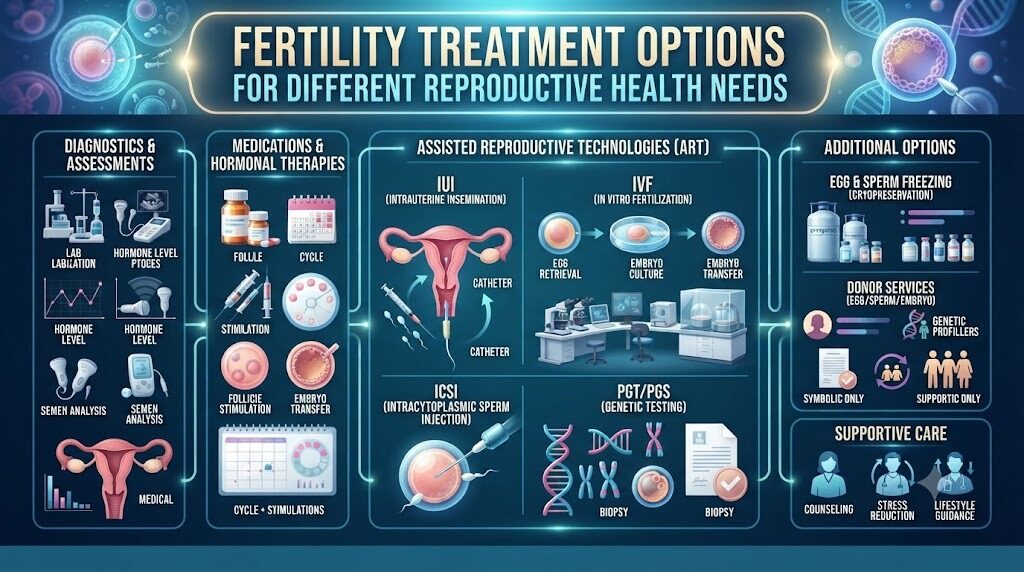
With cost and comparison covered, let's step back and look at treatment itself. Fertility care isn't one fixed road that every patient follows. This is exactly why fertility treatment options vary so widely between people. Some begin gently, with hormone tracking or simple medication support. Others move directly into lab-based procedures depending on their diagnosis. Your specific path depends on age, health history, and test results. Two people with similar goals may still follow completely different treatment maps. This is completely normal within fertility medicine. Understanding these pathways early makes future doctor visits feel far more manageable.
Comparing Key Lab Techniques
Within these pathways, two lab methods come up constantly: IVF and ICSI. Standard IVF places sperm and egg together in a dish, letting fertilization happen naturally. ICSI works through a more targeted process instead. An embryologist selects a single healthy sperm and injects it directly into an egg. This method often supports cases involving male fertility challenges. The real ICSI vs IVF discussion, then, isn't about ranking one over the other. It's about matching the correct method to your specific diagnosis. Lab test results, not personal preference, typically guide this decision.
Preserving Fertility for the Future
Sometimes, starting a family right now simply isn't the plan, and that's valid. Egg freezing offers a way to protect fertility options for later years. During this process, eggs get retrieved and safely frozen for future use. Timing genuinely matters here, since egg quality naturally shifts with age. Many people choose to freeze eggs earlier rather than risk waiting too long. Regarding money, egg freezing cost usually covers retrieval and initial lab processing. A separate, often-forgotten yearly storage fee also applies here. Always confirm this recurring charge clearly before committing to any freezing plan.
Finding Care Close to Home
Treatment rarely finishes in a single appointment. It usually means repeated scans, bloodwork, and check-ins spread across several weeks. A distant clinic can turn this routine into a genuine burden fast. That's exactly why so many people search for IVF clinics near me first. Choosing something local definitely simplifies those frequent monitoring visits. Still, don't let convenience be your only filter here. Every option among nearby IVF clinics deserves a proper look at lab credentials and staff qualifications too. Closeness helps, but it should never replace real due diligence.
Table 2: Fertility Treatment & Planning Factors
| Treatment Type | Primary Purpose | Key Stage | Practical Tip |
|---|---|---|---|
| IVF | Fertilize egg and sperm outside the body | Retrieval and lab fertilization | Ask directly about the clinic's lab history |
| ICSI | Support male-factor fertility challenges | Direct sperm injection into egg | Confirm this suits your diagnosis first |
| Egg Freezing | Preserve fertility for a later timeline | Retrieval and freezing stage | Clarify all storage fees upfront |
| IUI | Place sperm directly into the uterus | A gentler, earlier treatment step | Often tried before advanced procedures |
| Donor-Assisted Treatment | Use donor eggs or sperm for conception | Screening and careful matching | Verify donor screening rules in advance |
Evaluating Cross-Border Care
Some patients widen their search well beyond their home country. Choosing IVF treatment abroad can often unlock noticeably lower prices. It may also open access to donor programs unavailable locally. This path does require extra planning, though. Travel schedules, visa paperwork, and language differences all need attention. Notably, IVF cost by country can vary widely depending on the region. Local wages, regulations, and available lab technology all shape this variation. A lower price tag doesn't automatically mean weaker care quality. Careful, honest comparison always matters more than the number alone.
Real-Life Scenarios
- A couple builds a spreadsheet comparing written quotes from six clinics before booking their first appointment.
- A patient with a demanding job schedules early-morning monitoring visits to avoid missing work.
- Someone researching donor programs discovers stricter regulations at home, then explores IVF treatment abroad instead.
- A patient feels overwhelmed by medical terms during her consultation, then requests a simpler follow-up explanation.
Common Mistakes to Avoid in Fertility Research
- Accepting a starting quote that quietly leaves out medication costs.
- Judging clinic success numbers without checking the age groups involved.
- Forgetting the recurring yearly storage bill tied to frozen eggs.
- Skipping proper donor screening and legal verification checks.
- Picking a provider only because they responded to inquiries fastest.
- Missing smaller charges buried deep inside lab invoices.
- Assuming all clinics measure and report success identically.
- Failing to ask how many cycles similar patients typically need.
- Underestimating how much planning international travel actually requires.
- Skipping a second medical opinion to save time or money.
How IVFHospitalsNow.com Can Help
Handling all this research alone can feel like a second job. IVFHospitalsNow.com exists specifically to ease that load. It offers clear, itemized cost explanations that actually make sense to read. It also maintains educational directories built for fair, unbiased comparisons. Beyond that, it provides ready-made question lists for your very first consultations. It never claims to replace a doctor's professional judgment. But it can absolutely turn an overwhelming search into something far more manageable.
A Simple 7-Step Research Roadmap
- Goal: Define clearly what you want this treatment to achieve.
- Search: Explore both nearby and international treatment paths.
- Shortlist: Narrow your options to three or five strong candidates.
- Compare: Weigh pricing, lab technology, and honest outcomes together.
- Ask: Walk into consultations with sharp, specific questions ready.
- Verify: Confirm accreditation and complete pricing in writing.
- Decide: Move forward calmly, backed by solid research.
Frequently Asked Questions
Question 1: How can I manage emotional stress during fertility treatment?
Fertility treatment can feel emotionally heavy for many patients. Talking openly with a partner or counselor often helps relieve pressure. Some clinics offer support groups specifically for fertility patients. Setting realistic expectations about timelines also reduces stress significantly. Never hesitate to ask your doctor for emotional support resources alongside your medical treatment plan.
Question 2: Will I need to take time off work for treatment?
Most patients need some flexibility during monitoring and retrieval phases. Appointments often happen in the morning, before typical work hours begin. Egg retrieval usually requires one or two rest days afterward. Embryo transfer typically needs minimal recovery time as well. Discuss your schedule with your clinic early so you can plan time off appropriately.
Question 3: What does embryo grading actually mean?
Embryo grading helps doctors assess which embryos look healthiest before transfer. Grades typically consider cell number, symmetry, and overall structure quality. A higher grade doesn't always guarantee pregnancy success, though it does help selection. This grading system varies slightly between different labs and clinics. Ask your embryologist to explain your specific results in simple terms.
Question 4: What's the difference between a natural cycle and a medicated cycle?
A natural cycle relies on your body's own hormone rhythm without added medication. A medicated cycle uses hormone injections to stimulate multiple egg growth instead. Medicated cycles often produce more eggs, improving overall success chances. Natural cycles may suit patients seeking fewer medications for personal reasons. Your doctor will recommend an approach based on your specific fertility profile.
Question 5: Do fertility treatment options differ for secondary infertility?
Secondary infertility, meaning difficulty conceiving after a previous pregnancy, still involves similar fertility treatment options. Doctors typically start with diagnostic testing to identify new underlying causes. Age and prior pregnancy history both influence recommended next steps. Sometimes lifestyle changes since the last pregnancy also play a role. A thorough evaluation helps determine the most suitable path forward.
Question 6: Are IVF clinics accessible for single parents or same-sex couples?
Many IVF clinics today welcome single parents and same-sex couples openly. Policies do vary by clinic and by country's local regulations. Some regions have specific legal requirements around donor use for these situations. Always confirm a clinic's policies and legal framework before booking. Choosing an inclusive, experienced clinic makes this journey considerably smoother overall.
Question 7: What side effects come with common fertility medications?
Common side effects include bloating, mood changes, and mild headaches. Injection site soreness is also fairly typical during stimulation medication use. Most side effects remain manageable and temporary for the majority of patients. Rarely, some patients experience more serious reactions requiring medical attention. Always report unusual symptoms to your care team immediately rather than waiting.
Question 8: What happens if an embryo transfer doesn't succeed?
An unsuccessful transfer is understandably difficult, but it doesn't end your options. Doctors typically review the cycle to look for possible explanations. Sometimes another transfer with a remaining frozen embryo becomes possible. Other times, doctors recommend additional testing before trying again. Discussing next steps calmly with your doctor helps you plan a realistic path forward.
Question 9: What blood tests are usually required before starting treatment?
Common pre-treatment tests include hormone level panels and infectious disease screening. Doctors also often check thyroid function and ovarian reserve markers. These results help doctors design a safe, personalized medication plan. Testing requirements can vary slightly between clinics and countries. Always ask for a complete list of required tests during your first consultation.
Question 10: Should I choose a single embryo transfer or multiple embryos?
Single embryo transfer is often recommended to reduce multiple pregnancy risks. Transferring multiple embryos can raise success chances but also raises certain risks. Your doctor will factor in embryo quality, age, and personal preference here. Multiple pregnancies carry higher health risks for both mother and babies. This decision deserves a detailed, honest conversation with your fertility specialist.
Question 11: Are there financing options to help cover IVF treatment cost?
Yes, many clinics now offer payment plans to manage IVF treatment cost. Some regions also have specialized fertility financing companies offering loans. A few countries provide partial government support for certain patients. Always ask your clinic about available financing options directly. Comparing interest rates and repayment terms carefully protects you from added financial stress.
Question 12: Can I switch clinics in the middle of my treatment?
Switching clinics mid-treatment is possible, though it requires careful coordination. Your medical records and test results usually transfer with proper request. Some steps, like ongoing medication cycles, may need to restart depending on timing. Always discuss your reasons openly with both your current and new provider. A smooth transition depends heavily on clear communication between all parties involved.
Conclusion
Every fertility journey starts with the same two worries: cost and outcome. Understanding your fertility treatment options clearly removes much of that early fear. Always confirm every additional cost before agreeing to any treatment plan. Look past bold headline statistics toward the fuller, honest picture underneath. Speak openly with a qualified doctor before finalizing any major decision. Walk into every consultation with clear, thoughtful questions prepared in advance. These simple habits protect both your finances and your emotional wellbeing throughout this process. IVFHospitalsNow.com remains available to support this journey with honest, independent guidance. With the right information, you can move forward feeling calmer and genuinely more prepared.